Author: Everyone Left

  • Relationship privilege

    So I want to coin a new term called Relationship privilege.
    It’s when you’ve had at least one stable, constant loving relationship.

    And you might be thinking – wait, how is that a privilege?
    Isn’t that just… normal? Isn’t that just the status quo.

    Sadly no. For some people, it’s not.

    Some of us have never had a single relationship like that.
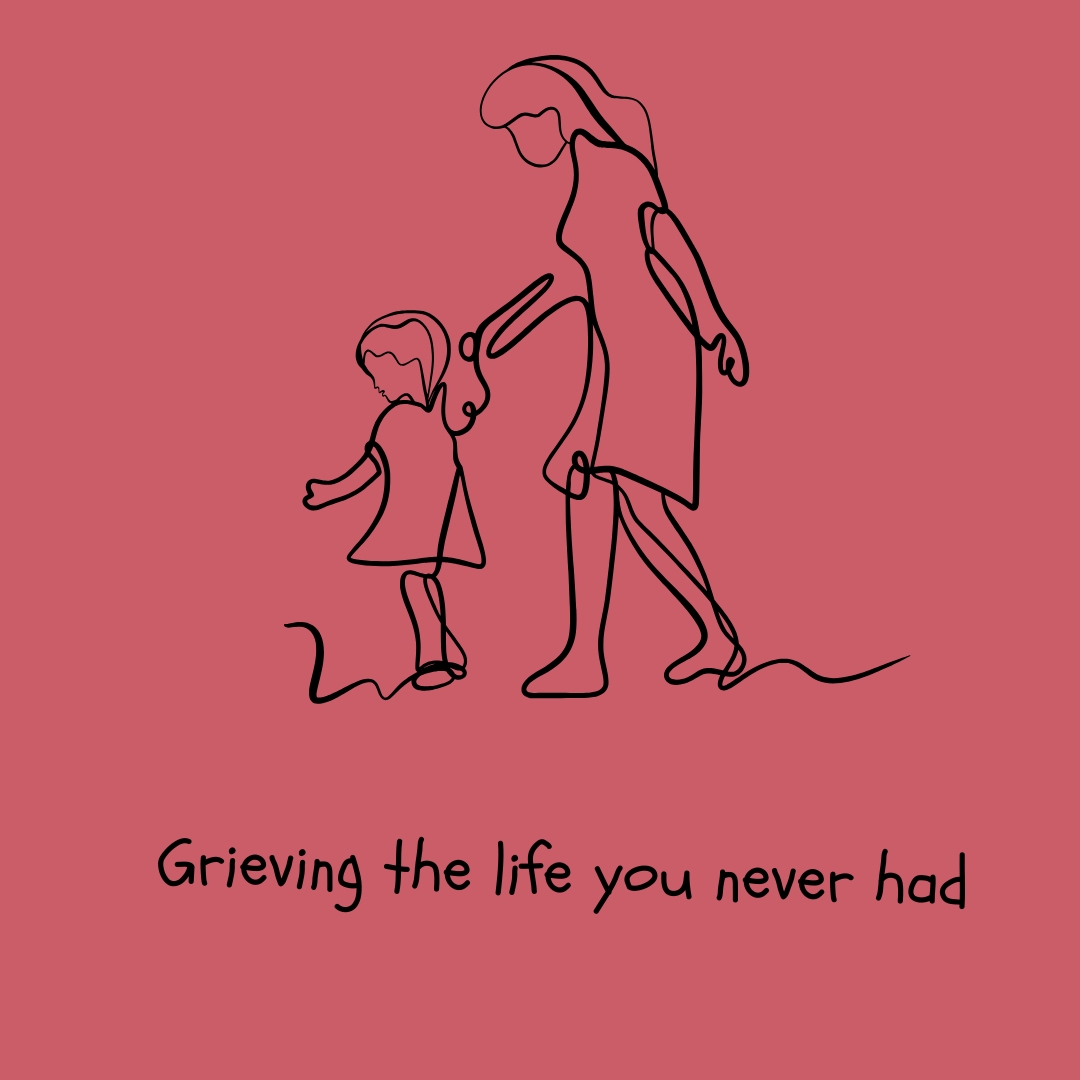
    Not a parent. Siblings. Not even a friend we could truly rely on.

    I first thought about this term while grieving a life I never had.
    Because to someone who’s relationship privileged,
    they can’t always see the gaps in people like me.

    The things they take for granted like
    a mum to call
    a dad who shows up
    a friend who stays

    Like these are things that people with no relationship privilege would ache for. They’re things that I ache for.

  • Grieving the relationships and life you never had.

    Grieving the relationships and life you never had.

    You know the word grief.
    You think of losing someone who was once there, and now they aren’t.

    But what about grieving someone who was never there to begin with? But instead of someone, it’s everyone.

    Devil advocates would say, “At least you’ll never know what loss feels like… you’ve never had to lose them in the first place.” In their heads, this makes it all easier.
    Last I checked, I’m still human. And like any human. I still deserved real connection. I’ve lost everything and everyone I should’ve had, but did not have. I’m mourning the death of a life and relationships that never existed and was not built on love.

    I was so lonely, and nobody ever saw it. Because I quickly learned as a child, that my pain does not matter. My pain wasn’t worth the emotional discomfort of people whose lives were shaped by relationship privilege.

    I was just a child and the way I made sense of it all. Is that there must be something wrong with me. I never had anyone to tell little me that it was never her fault.

    But what I did have was:
    The “mum” who believed I was never good enough for her.
    A “dad” who believed I was too much for his wallet.
    A “family” that focused on your anger, not the pain underneath it.

    Someone once told me something that has never left me:

    It’s harder to have never had someone at all
    than to have had them and lost them. At least you had them. You know love is.

  • The mother and daughter

    The mother and daughter

    Introduction

    I thought I’d be fine. I’d gone to another wedding just last month and somehow survived it. But this one – this event, was the one that showed me that I did not matter.

    The stakes were high. I really didn’t want to be left out, so I ignored the few who told me not to go and went anyway. I told myself I survived the last one, so I’ll survive this one too.
    The wedding event

    Everyone showed up.

    And everyone showed up in their best pink attire. The venue was electric, with sound engineers, stage lighting, a dessert spread, and a beautiful cake with my cousin, the bride’s, name on it.

    None of it, none of it, could have been done alone. You could tell it was all hands on deck. Friends. Family. The circle of people the bride could count on.

    She had a bridal entrance where her mother wept as soon as she saw her beautiful daughter. Her daughter, who was soon to leave the family home, leaving her mama, moving on to the next chapter of her life as a married woman.

    Growing up, my cousin’s mother, my aunt, I wanted her so badly to be my mother. I even called her “mum” when I was a young child.

    And now here I was, standing at this wedding, watching someone else live in a world of love and abundance.

    Everything I should have had, but didn’t.

    And I felt like I deserved it.

    My cousin and her siblings were posing for perfect family photos, a family that gathers, that shows up, that makes things happen.

    And me, realising in that moment that I will never have that with my own siblings. When I got married, and when they get married, there won’t be this kind of beautiful event we all pull together to create. There won’t be memories built out of love and closeness.

    So when it was my turn to get married, I didn’t have a circle. I had to piece one together all by myself. I had to hire people, recruit friends, bring in coordinators. Where there should have been warmth and memories, there were cold, transactional approaches. Where there should have been family, there were strangers.

    Then came the finale portion of the night, performances and dances. My cousin had people in her life she could dance with. Time she would have spent in the days and weeks before the event putting those dances together. Quality, unforgettable, lifetime memories created.

    There was nothing left for me to do but sit there and witness everything I ever wanted, all at once, all in one single room.

    As everyone was absorbed in the dance performance, laughing, clapping, cheering for the bride. Endless streams of tears ran down my face. My mind kept flashing back to moments from the night, especially how this bride was so loved by her mother.

    And just like that, I thought I was better off dead. Nobody truly cares about me. That’s why I never got it all.

  • Set that kid free

    Set that kid free

    Have you ever, as an adult, wondered why something so small hurts so much? Yeah, that’s your inner child speaking.

    Childhood, man, childhood is not something to be messed with.

    If you’ve had a rough one, you know what I mean. It’s like the “normal” stuff easily feels impossible for you. There’s this turbulence inside you that no one else can see.

    It’s wild how almost everything can be traced back to your childhood. Those early years – the foundation. That one window of time where your parents, your caregivers, should not mess up so badly. Because that stuff literally shapes your entire life.

    But here’s the thing: if bad things did happen to you, those painful feelings got locked up inside you as a kid. That kid is still waiting, stuck in that moment that stunted them.

    That kid has been forgotten about, and does not deserve to feel stuck.

    You, as an older person, should do that kid justice and go back. Go back to that time and understand what happened.

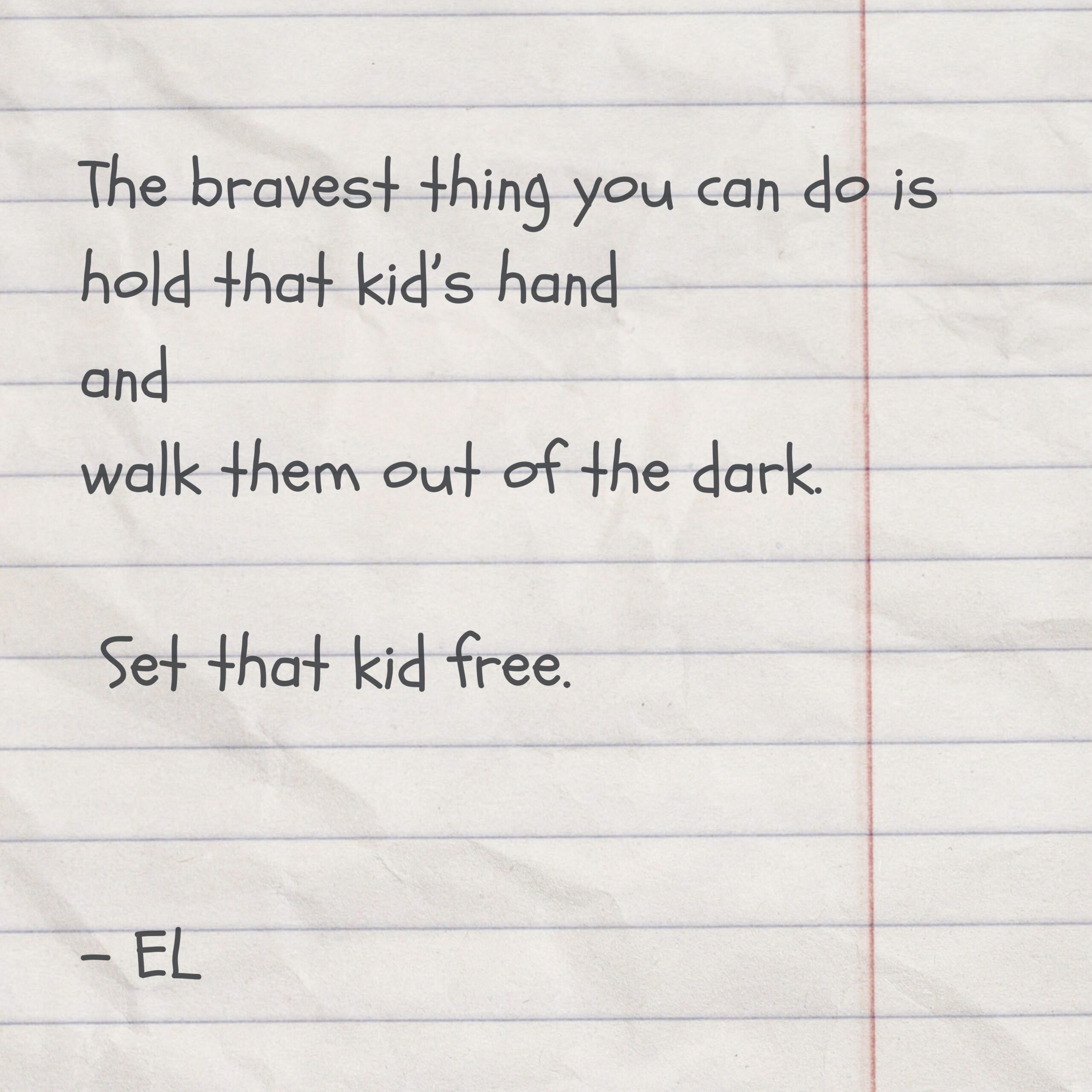
    The bravest thing you can do is hold that kid’s hand and walk them out of the dark. Set that kid free.
  • Introduction – Weddings & Empty Field (Part 1)

    Introduction – Weddings & Empty Field (Part 1)

    Hi there!
    I’ve split this blog post into a series, otherwise it would be way too long to read. The rest will be coming out soon! Don’t forget to subscribe to my newsletter so you don’t miss out. I appreciate you — thank you x
    – EL

    Introduction

    This summer was full-blown wedding season. I had two wedding invites – a rarity for me.

    And the next thing you know, I’m spending every single weekend on the high street, hunting for a guest outfit right up until the wedding date. I was being painfully perfectionistic. I told myself I had to look “nice.” I did not want to feel underdressed. And most importantly, I did not want to feel like I didn’t matter. So the stakes were high. What I used to view as such a fun activity – going shopping – I managed to turn into a joy-sucking leech, like with many things where I place high expectations on them.

    And well… with trying all these guest wedding outfits, you can’t help but think back to your own. I had two weddings. The first one was small and intimate. It was simple.

    But then I made the mistake of having a second wedding event.

    You see… my mother had an insecurity about not having the wedding with all of my extended relatives. And long story short – I’ll make a separate blog post about this – her insecurity became my insecurity. So I wanted another bigger “wedding.” The one that would prove that I mattered. I pictured being surrounded by people who loved me, being loved, and I thought I would live out that fantasy.

    But what I did not expect was to be boycotted. By my parents and many other relatives. And this left me with the massive bill to pay at the end. A few people showed up, and the ones that did came, ate, and left.

    And at the end of it all, there I was in a white dress, standing in the vast open field, tears streaming down my face. Completely alone.

  • Exclusion, rejection and the cherry on top abandonment

    Exclusion, rejection and the cherry on top abandonment

    It means you don’t matter. That’s what it feels like.

    I want you to remember a time when you felt like you did not matter. You as a person, you as a soul.

    Perhaps you get that sinking feeling your stomach – like you’re falling.

    Now, take those thoughts and feelings and disproportionately multiply that by a gazillion.

    And you should be roughly about where I’m at – emotionally.

    In other words, you’re no longer here. You are no longer you.

    I’ve experienced exlcusion more times than I want to count. From people taking measures to cut me out or hide from me, and to many times where I’ve created my own exclusion.

    A lifetime of exclusion, rejection, abandonment, and being the last thing on people’s mind and hearts – has shaped me. And what I’ve learned from all of this and after many years is –

    I know what it’s like to be truly lonely, I know what it’s like to be unworthy. I know what it’s like question your existence in this life.

    Looking back to childhood though, I didn’t create that environment. Children aren’t born bad or unworthy. And I was no exception to that rule. I didn’t choose rejection, I didn’t create it. I was just a child who found herself in a world where exclusion was already there and it just kept on being reinforced.

    And worst of all – I perceived it as there must be something wrong with me.

    And that’s why I get myself excluded, because it’s so familiar. I know no different. Why would I? If a child believes they are so unworthy, they’re so unloved, so unseen. Why wouldn’t they?

    I can’t tell you how painful it is when the moment hits you so fast –

    It strikes me in less than a second. All of a sudden, time is distorted. I’m unaware of my surroundings, my heart starts beating irregularly.

    The only way I can explain it is that, in that instant, I step outside my body because it’s too painful to stay inside it. I try my best to numb myself, to squash it down. I’d rather not be here than feel the pain of being reminded how unworthy I already am…

  • Jury duty

    Jury duty

    So I have been selected for jury service. Once upon a time, I was curious and would have loved to be on jury service, but now I was dreading the long waiting times. I was thinking to myself, erghhhh—what, waking up at a time I usually don’t, having to trek fourteen miles one way to the court.

    But then came the realisation: imagine doing this journey in the morning not as a juror but as the defendant. It was a scary thought, really scary—the thought that your life has been changed, will never be the same again, destroyed even. I came back to reality and held onto the gratitude that this isn’t my reality, but potentially could be for someone else.

    Anyways, I was sent home today. Before I knew it, I was back in my kitchen making an omelette for myself. I feel eternally grateful to be able to be making omelettes and going about my day as normal.

  • Cooking from Love Vs Cooking from Duty

    Cooking from Love Vs Cooking from Duty

    taste the difference. I really can.

    This is something I’ve noticed with women, although we’re seeing men slowly becoming more involved in the kitchen. Societally, it’s still not where it needs to be.

    Making food out of just duty usually involves women being self-sacrificial — and sadly, they often have very little or no help. It comes from a place of “I have to do this” because nobody else will. That duty can come with resentment. And it only gets amplified when guests are over, as now she’s fighting for that mental checkbox to be ticked off: “Guests are fed” and “I don’t want any bad reflection on me.”

    But at what cost? The entire performative process is draining. Cooking up a storm, then wanting to clean the kitchen from top to bottom and you just want everyone to leave. And I don’t blame you…

    On the other hand, food made with love tastes better, because it was made with love and care. It wasn’t self-sacrificial. She enjoyed the process. She knew this would feed her and her loved ones. She had the mental and physical energy. She’s in her zone, in a flow state, enjoying what she’s doing.

    Feeding people from a purely dutiful place feels cold and transactional. Not only does it show in the food, but it also clearly shows in her, in her exhaustion and her inability to truly show up.

    I’d rather have a cup of tea than watch someone break their back if it didn’t come from a place of love and care. It wasn’t real to begin with. From chef to guest, neither of us got what we wanted in the end: to feel good, to connect, to make a memory.

    And if food becomes the barrier, if seeing each other always has to mean a full-on spread, and that’s the reason you don’t ask me to come over, we’re barely going to see each other.

    My stomach does not need to be fed, my soul does.

  • Not like old times, eh?

    Not like old times, eh?

    I’m in the living room nervously waiting for a call from a old friend.

    A catch-up call. We hadn’t spoken in over a year. So we found time in our diaries to talk. This is the kind of friend I’d catch up with once every few years. She’s a good person, recently has become a new mother, a reserved soft-spoken person.

    In the past, whenever we’d speak, I would either completely withhold or soften the truth about what I was going through. Because being rejected or being abandoned by people hurt me more than keeping it in.

    So I’d say things like, “Yeah, I was struggling during university”. When the truth is, during university, I didn’t want to want to live. I used to think and still think, that if I died tomorrow, no one would care. Not a single person.

    But today, for the last nine months, I’ve been going to therapy. And…. I absolutely hate it!
    You mean to tell me, that I need to bring up all the pain I buried deep underneath? The stuff that makes me want to kill myself? Bring it all to the surface!

    But what I’ve learnt, and am still learning, is that therapy is about realising the truth of what you’ve been through, and being true to those around you.

    So in this conversation with her, I was honest.

    Instead of saying, “Yeah, I had a challenging upbringing,”

    I went for it.

    I said: “I was a child of an abusive home. That my mother was the kind of person who wouldn’t take a bullet for her children—she’d save herself. She’d leave them behind. And then somehow make it their fault. Make them feel like they failed to save her.

    The friend grew uncomfortable. The weight of what I was saying was too much. So she pivoted to the kind of questions that seem harmless.
    OR so you would think.

    She asked, “So, how are your siblings?”

    I answered: “I don’t have a great relationship with them. Things are swept under the rug, and we were raised to be against each other. That’s what happens when you grow up in an abusive household.”

    The phone call was getting too tense for her.

    Then came the topic of my second wedding event – which she attended.

    I couldn’t bring myself to say how much it hurt—that people wouldn’t come, because they were in alliance with my parents. And the few who did—the ten people that showed up—it hurt even more how quickly they left. How they disappeared the moment they were done eating. How it all felt like abandonment. I had spent months planning it. Years dreaming it. So much of our money poured into it.

    I had this image in my head of being surrounded by people who cared about me. Because that’s all I ever wanted: to be cared for. Build memories that would last a lifetime. And when they left, it showed me something. That I do not matter to people.

    But this was far too painful for me to say on the phone without struggling to keep it together.

    So instead, I said:
    “That entire day I was in survival mode. I still can’t bring myself look at the pictures. It was traumatising—people boycotting us, refusing to come.”

    I didn’t mention how people left early. That part stayed hidden. Because I knew it’d directly affect her, I spared her her feelings.

    She responded, uncomfortably: “But I had a nice day that day.”

    I said: “I’m glad you did. I didn’t. It was supposed to be another wedding day for me. But I’ve learned to pretend so well, you’d never be able to tell.”

    The call ended in discomfort. It felt like she was slowly backing away from me—away from the heaviness—until she disappeared into the thin air.
    And yeah, I dropped a lot of heavy stuff on her for a catch-up call after a year, for someone I don’t speak to regularly.

    And it hurt.
    Her reaction hurt me.
    It felt like I was being abandoned,
    But this time, I was showing up as myself.

    And what surprised me,
    is that I didn’t sever the relationship.
    I didn’t tell her to go fuck herself.
    Instead, I talked to my husband about it.
    I told him how much it shook me.
    And I wrote this post.

    And what it made me realise is: I am changing.

    I am no longer the person who completely withholds the truth.
    And I’m getting less afraid of people leaving because of it.

    It’s small, but I am changing…

  • Plaster people

    Plaster people

    I’ve been going to weekly therapy for over 8 months now.
    And recently I received a missed call from an old friend – the kind of friend you speak to once every few years.

    This time, though, I felt different during that phone call. Therapy is a challenging process where you start to be more honest with yourself and others.

    So for good reason, it’s becoming increasingly difficult to keep softening the truth of what I’ve lived through just to make others feel comfortable – I’ve been doing that my entire life.

    When we finally spoke, it started with the usual questions:
    “How are you?”
    “How’s your family?”
    “Are your siblings okay?”

    Even these basic questions mean something to me. Because I never had a normal upbringing and relationships with family.

    People see that I’m married. I live on a quiet farm, a I travel more than I did when I was alone. From the outside, it all looks fine.

    People make the mistake that my life today is the proof that everything before no longer hurts. If anything, the idyllic picture of my life does the opposite. It exposes the contrast between internal and external environments. The calm around me makes the storm inside me louder.

    That phone call revealed something.
    It wasn’t just that they couldn’t see my pain — it was that they didn’t want to.
    Because if they acknowledged it, they might have to do something with it.
    They might have to sit with it. Sit with me.

    That’s when I understood:
    People often don’t put a plaster on your life to help you heal
    they do it so they don’t have to look at your wound.